
If you have ever spent £8,000 on a bathroom upgrade and wondered whether it actually moved your property value, you are not alone. Understanding what bathroom improvements add the most value to a home is one of the most common questions UK homeowners face before committing to a renovation, and one of the least clearly answered.
Most people upgrade with a vague sense that bathrooms “add value,” but without any clear idea of which projects deliver a real return and which ones simply look good on a mood board. That gap between enthusiasm and hard data can be costly.
The good news is that bathroom improvements are consistently among the strongest value-drivers in UK residential property. The question is not whether to upgrade, but which type of upgrade to prioritise. The pattern is clear from years of project experience in the West Midlands: the bathroom improvements that add the most value to a home are almost never the flashiest ones. They are the ones that are correctly scoped, properly installed, and matched to the property’s market position.
This guide ranks the improvements that genuinely deliver in the UK market, covers realistic cost bands, explains what to avoid, and gives you a practical framework for planning a project that earns its investment back.
Why the bathroom is one of the most valuable rooms to upgrade
UK property data supports the bathroom’s reputation as a high-return renovation target. Research from Nationwide consistently points to adding a second bathroom as delivering approximately a 6% uplift to average house values. Separate research from Direct Line places the range at 5-10% for a second bathroom addition, depending on property type and local market conditions. Compared with many other home improvements, bathrooms rank unusually well because they are functional, highly visible during viewings, and directly tied to buyer expectations.
There is an important distinction worth drawing early. A 6% uplift in house value is not the same as a 6% return on your renovation spend. If you invest £10,000 in a bathroom on a £250,000 property and the property rises to £265,000, you have recouped £15,000 in value but spent £10,000 to do it. That is a solid outcome. The same £10,000 spent on a property where the ceiling value is already being approached is a very different calculation. Understanding payback percentage, not just headline uplift, is what separates a sound investment from an expensive cosmetic exercise.
What bathroom upgrades add the most value to a home
Full bathroom upgrade
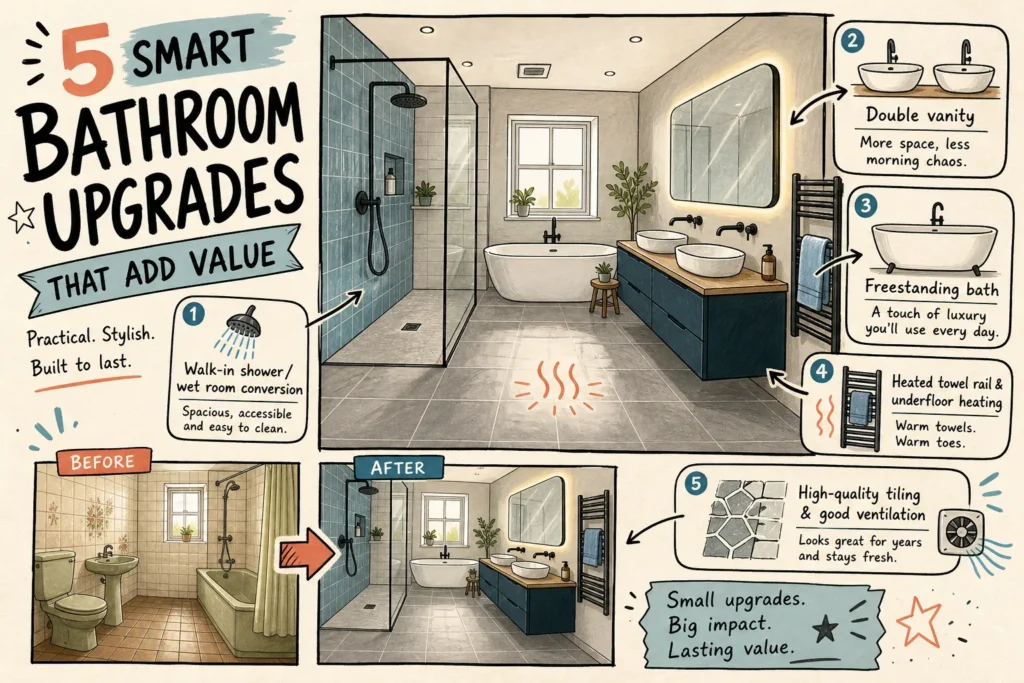
A full refit replaces the suite, tiling, flooring, and all installation work. In 2026, expect to budget approximately £8,000 – £20,000 for a standard UK bathroom, with the range reflecting differences in specification, property size, and labour rates across regions. The key nuance here is that a well-executed refit tends to outperform both budget installations and premium refits when resale is the primary goal. Buyers recognise quality, but they do not pay proportionally more for specification that exceeds what home supports. Getting the scope right matters as much as the products you choose.
Tiling and sanitaryware upgrades
Not every improvement needs to be a full refit. Replacing sanitaryware and upgrading to large-format porcelain tiles can transform a bathroom’s feel without a structural overhaul. Large format ceramic tiles typically run at £45 – £100 per m², and the visual premium that larger-format tiles create in smaller bathrooms is well documented: they reduce grout lines, produce a cleaner look, and signal quality immediately to buyers.
UK buyer surveys consistently rate storage and clean, uncluttered aesthetics as high priorities. If your bathroom already has a reasonable layout, targeted investment in tiling quality, integrated storage, and better brassware can achieve a meaningful improvement in buyer perception. For further reading and updates on market trends and practical advice, see Bathroom News & Advice | Vortex Bathrooms Solihull.
Wet rooms, walk-in showers, and the features buyers actually want
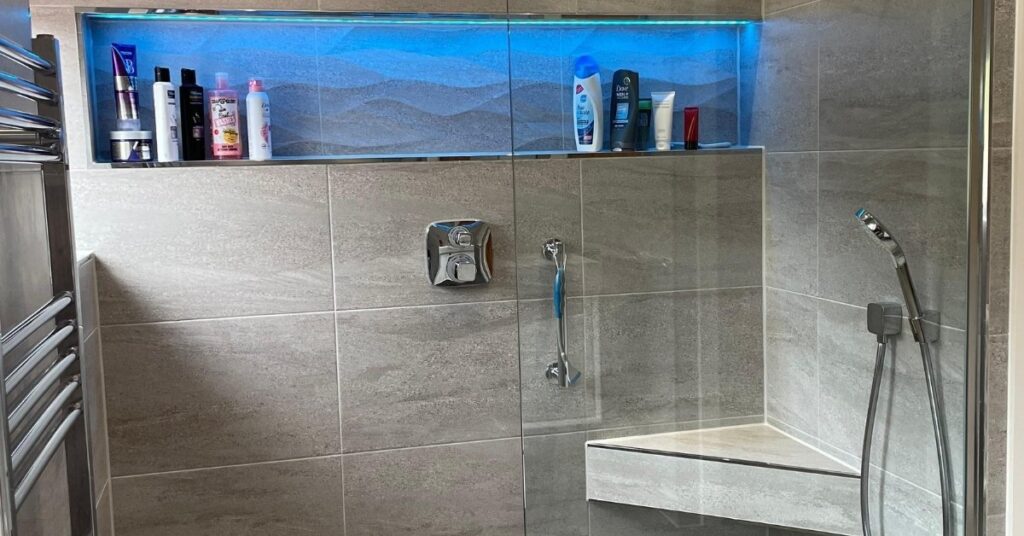
A properly installed wet room carries a cost band of approximately £12,000 – £20,000+, with most standard conversions landing in the £14,000 – £15,000, range for a typical UK family bathroom. The investment is higher than a standard refit because waterproofing, tanking, drainage specification, and the additional tiling complexity all add to both labour time and materials cost.
What makes wet rooms compelling from a value perspective is the signal they send. A properly specified wet room reads as a premium, considered upgrade rather than a routine bathroom replacement. Style-conscious buyers respond to them, and they carry an inherent accessibility advantage for buyers thinking about long-term usability.
Walk-in showers more broadly feature consistently in UK market commentary as attractive to modern buyers. According to broader buyer survey data, a separate standing shower was the most valued bathroom feature for 46% of buyers when viewing a property; shower-and-bath combinations were rated highly by 78% of respondents. Storage remains a critical priority, with 76% of respondents in one major survey rating it as essential, though it is worth noting these figures draw on international as well as UK buyer research and should be treated as indicative rather than definitive for all UK markets. Double basins and vanity storage are increasingly expected in larger family bathrooms, particularly at the upper end of the market.
Underfloor heating is worth framing correctly. It adds genuine comfort and a premium feel, but survey evidence for it as a standalone value driver is limited. Treat it as a finishing touch that enhances a well-specified bathroom rather than a primary investment rationale. Installation typically adds £500 – £1,500 to a project depending on floor area and system type.
What to avoid if you want a decent return
The most consistent mistake is over-spending relative to your property’s ceiling value. A £12,000 bathroom in a house where comparable properties sell for £200,000 simply cannot be recovered through resale. Many advisers recommend keeping bathroom renovation spend within a modest proportion of property value, often in the single-digit percentage range, to avoid over-capitalising. This is not a ceiling on quality; it is a discipline on scope.
An equally damaging mistake is cheap installation dressed up as a cosmetic update. Visible grout failures, poorly aligned tiles, and inadequate waterproofing do not just fail to add value, they actively undermine buyer confidence. A surveyor or an observant buyer will notice, and the result can be a reduced offer rather than a premium one.
How to plan your bathroom upgrade for the best payback
Start by setting a budget informed by the cost bands above and identifying which tier fits your property and your goal. A cosmetic refresh suits a bathroom with good structure but dated finishes. A full refit is appropriate when the existing suite is beyond saving or our guide Design Your Bathroom Layout: A Step-by-Step Guide shows the layout needs rethinking. An en-suite addition makes the strongest case in family homes where the absence of a second bathroom is a genuine sales objection. A wet room works best as the primary or second bathroom in a property where the specification level supports it.
On building regulations: a like-for-like refit is usually straightforward and does not trigger formal approval. Adding or relocating a bathroom requires more planning lead time, building control engagement, and a certified electrician for Part P sign-off. Factor this into your timeline, not just your budget. Labour represents the largest single cost in most UK bathroom projects, typically accounting for a significant share of total spend, so contractor selection and quote clarity matter as much as the products you specify.
Working with a specialist who combines design expertise with transparent, itemised pricing removes the most common sources of cost overrun. At Vortex Bathrooms, every Solihull project starts with a 3D render and an itemised quote before any work is agreed, an approach that gives homeowners a clear view of what they are investing and what the scope includes before committing a penny. That clarity is not just a convenience; it is how you close the gap between what you planned to spend and what you actually spend.
The clearest path from planning to payback
The hierarchy is consistent across the data, and it answers the question of what bathroom improvements add the most value to a home more precisely than a simple list can. Cosmetic refreshes deliver the strongest payback percentage because the outlay is low and the impact on buyer perception is immediate. Full refits and wet rooms add the most absolute value when correctly scoped and properly installed. En-suites are the most transformative upgrade when the property type and market position can genuinely absorb the investment.
The best bathroom improvements share a common characteristic: they match the property’s market position, use quality materials and installation, and are finished to a standard that buyers trust rather than question. This combination is what converts renovation spend into real property value.
If you are planning a bathroom upgrade in the West Midlands and want to know which bathroom improvements will add the most value to your home, the most useful next step is getting an accurate scope and quote before committing. Vortex Bathrooms offers a free design consultation with 3D renders and itemised pricing, so you can see exactly what you are investing and make an informed decision about which upgrade tier is right for your property. Get in touch to book your free consultation.